点石 | Auto Video Editing Agent
Problem & Demand
Qingdao Dianshi Stationery needs a constant stream of high-performing video ads for their extensive product catalog. The manual pipeline — find viral references, write scripts, cut footage, add subtitles and music — was their biggest bottleneck.
Each video editor in the Qingdao team could produce only 3 videos per day. With hundreds of SKUs to promote across multiple e-commerce platforms, the math didn't work. Products went without video support. Revenue was left on the table. The team needed to break through a throughput ceiling that manual workflows simply couldn't cross.
Solution
We built an automated video production agent on top of FireRed-OpenStoryline, an open-source video generation framework. Starting from a solid open-source foundation allowed us to deliver a production-ready system rapidly — and the client's requirements were extensive and specific:
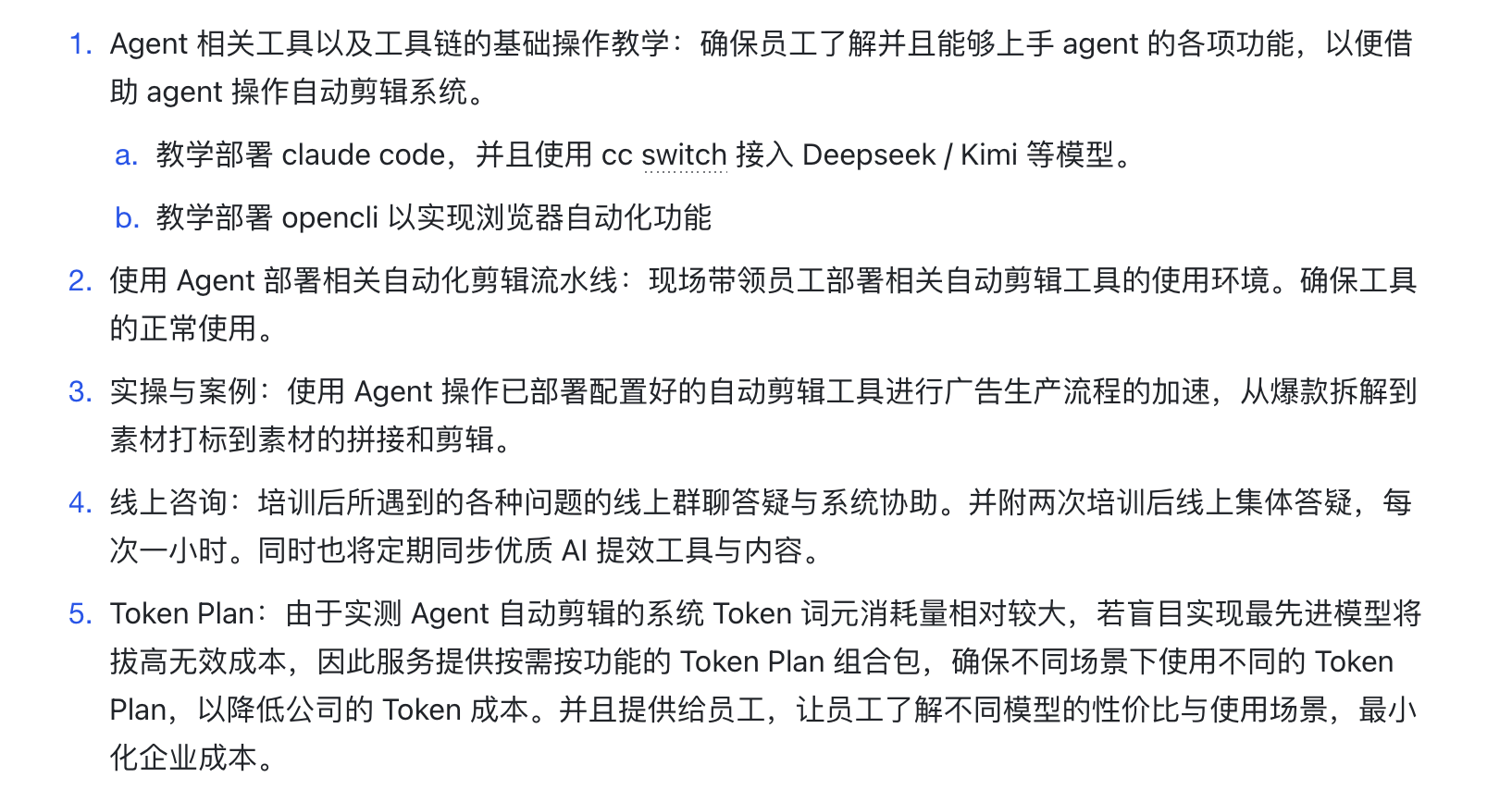
Based on these requirements, we designed a modular system architecture. Each stage — template discovery, script generation, automated editing, subtitle generation, voiceover, and music layering — operates as an independent, tunable component. The team can adjust creative quality per stage without touching the rest of the pipeline.
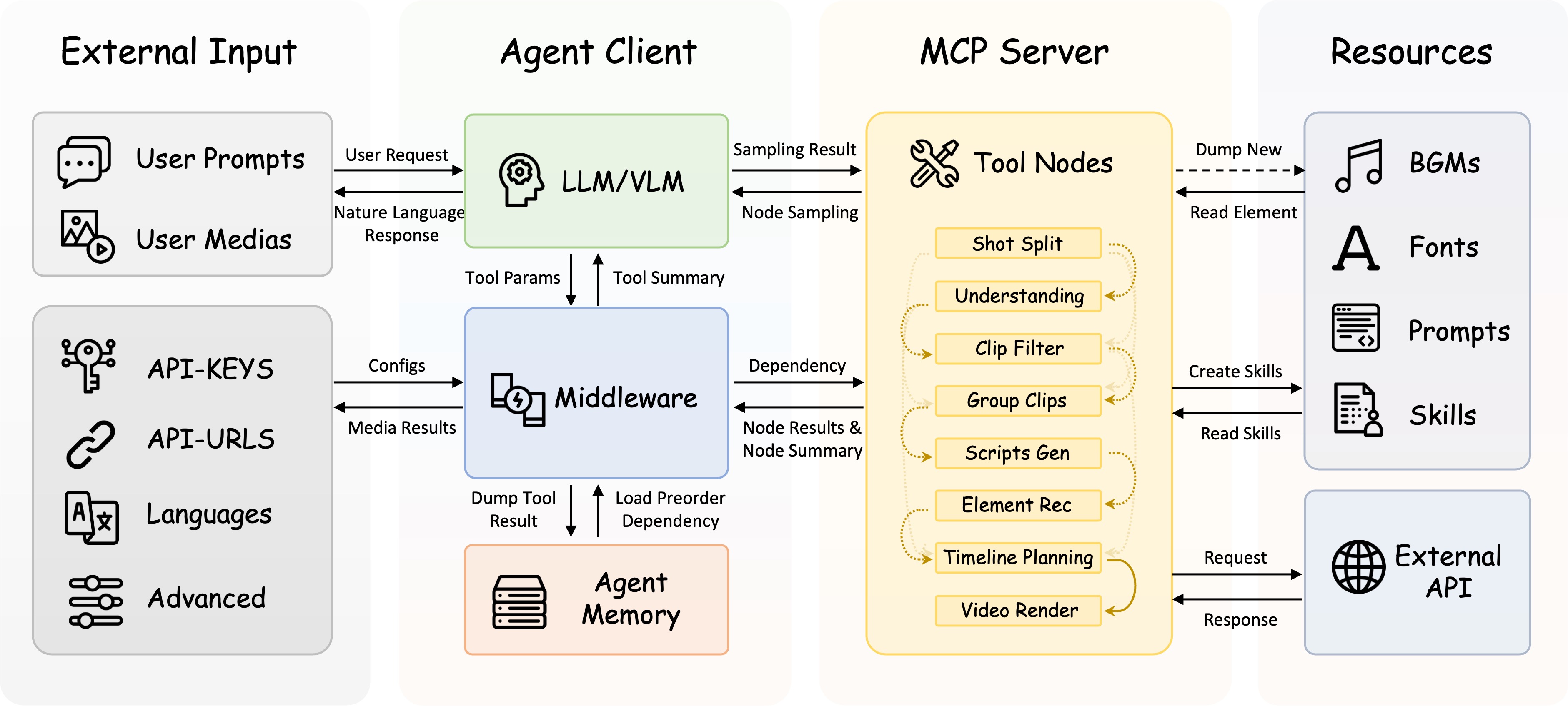
The video below demonstrates the FireRed-OpenStoryline base system in action. This is the foundation we built upon and customized for 点石. The deployed version cannot be shown publicly due to confidentiality terms — but the core video generation capability is demonstrated here.
The agent integrates directly with the team's existing file storage and workflow tools. Editors don't need to learn a new system — output lands where they already work, ready for review and final polish.
The results, measured in the Qingdao team's own numbers:
Each video editor went from producing 3 videos per day to 10–12 videos per day. A 3–4× throughput increase per person — meaning the same team can now support the entire product catalog without hiring.
We achieved this while keeping token costs exceptionally low through a Token Plan strategy: critical creative decisions — script structure, hook design, pacing — route through top-tier models where quality matters most. Routine processing — subtitle generation, format conversion, music layering — uses cost-efficient secondary models. Every AI inference dollar is maximized for creative impact, not wasted on commodity tasks.